Google has made medicine easier to understand, and has been a godsend for someone who doctors have secretly wanted to shut up , for years.

This is a collection of thyroid knowledge nuggets, collected over the years. I have tried to put everything here. Sometimes it may appear to be too much. :-)

Comments, brickbats, tomatoes (non-BT) and eggs (non-BT) welcome.

Shoes most unwelcome.

Just added !

Friday, August 3, 2012


Welcome to Apnathyroid,   the India Specific Thyroid information page ! 


This is an effort at drawing attention to this tiny butterfly shaped gland in your  neck. It has a direct influence on your wellbeing, and any change in what is considered its normal working, causes far reaching changes in just about every system in your body, nervous, digestive,   circulatory,   endocrine,  musculoskeletal and any more that you can think of!


The thyroid manages metabolism in our body at the Cellular level.  Its also a part of what one might call , a Hormone Orchestra;  a system   where the body, finely tuning its hormonal strings, has all the  hormones interacting in a very constructive way, keeping you happy and  healthy. Sometimes one of these hormones slides out of balance, and  although, compensating adjustments are there, like in our real world ,  there exist limits.


Misbehaviour of the thyroid is like something amiss  in your car's carburettor.  One manages, but one also tends to be lazy,  careless and ignore the signs. Thats where all the problems start. 


 Why India-specific ?


The last 20 to 30 years has seen as accelerated rate of what is normally termed "development" in India. We will confine ourselves to something that has affected the day to day lives of most Indians.

In my childhood, eating at home was the norm ;  whatever you got outside,   was frowned upon,   and we did not  DARE  disagree with what folks thought. There was very little ready-to-cook culture, and almost no  additives in food. Populations were less, pollution was less, and when you meant "fresh food" , it was always FRESH.      We never heard of people having   depression,   and there was really no mental situation, that a good sweat-dripping exercise session , done on a regular basis, could not cure.   And STRESS was  just a 6-letter word, which was not considered  fashionable to have.

In our late 30's , we came under the influence of " convenience "  foods; education levels ,    particularly among women shot up,    so more and more women started working.    Migrations from other parts of India into the big towns ensured high demand and low supply of the resources.   Pollution increased.        Additives increased.     Stress increased.      Fast food arrived on the scene.

In the last decade of the last century,    Indians proved they could match the developed nations,    stress-level for stress-level,      weight for weight, income for income,      luxuries for luxuries,     LDL for LDL,     plaque for plaque,     neuron for serotnin starved-neuron !

We started being afflicted by stuff we never saw happen to our parents.  Some of our parents are still around,    landmark pillars following their own sensible routine lifestyles,   having the strength of mind to say NO to certain things.

And so it comes to pass that whatever solutions that exist for our afflictions,   need to be a judicious mix of stuff you read ,     tempered with some wisdom     , based on our traditional diets,    social setups,   cultural customs etc etc.

This site is an effort at putting together such information, along with references to what new research and discoveries are telling us today !


Comments closed.  Email to contact.

Detecting thyroid disease by Computer...


Researchers in India have developed an improved expert system for the diagnosis of thyroid disease. They describe details of their approach to screening medical data in a forthcoming issue of the International Journal of Computational Science and Engineering.

 Jaganathan Palanichamy and Rajkumar Nallamuthu of the PSNA College of Engineering and Technology, in Tamilnadu, India, have descried that thyroid can effectively be diagnosed through proper and careful interpretation of the thyroid data but the classification of a raw dataset from patient records can also allow undiagnosed thyroid problems to be discovered through computerized screening.

An overactive thyroid can lead to increased perspiration, a raise pulse, tremors, anxiety, nervousness, and irritability, insomnia, thinning of the skin, fine brittle hair, and muscular weakness. Sluggish thyroid in contrast might cause constipation, cold intolerance, decreased sweating, a slow pulse, depression, dry skin and poor female fertility. Thyroid disease is often asymptomatic and is commonly undiagnosed. It is obviously less of a clinical problem if there are no symptoms but left untreated symptoms can ultimately become apparent causing various problems for patients with either an overactive or a sluggish thyroid.

They claim a accuracy of 93 % in diagnosing thyroid disease.

Read more  here.


Journal Reference:
  1. Jaganathan Palanichamy and Rajkumar Nallamuthu. An expert system for optimizing thyroid disease diagnosis. Int. J. Computational Science and Engineering, 2012, 7, 232-238

Friday, June 18, 2010

Short PR in ECG ?

A lot of us approaching , say 60, routinely have ECG's taken and get alarmed when a change is detected in his.

It has been found that if you take thyroid medication levothyroxine, this sometimes shows up in the form of some changes in your ECG. So it is important, that you inform the doctor about your medications when going in for a test like an ECG.

For a rigorous treatment of this subject, please see this

Friday, June 11, 2010


Welcome to Apnathyroid, the India Specific Thyroid information page !


This is an effort at drawing attention to this tiny butterfly shaped gland in your neck. It has a direct influence on your wellbeing, and any change in what is considered its normal working, causes far reaching changes in just about every system in your body, nervous, digestive, circulatory, endocrine, musculoskeletal and any more that you can think of!

The thyroid manages metabolism in our body at the Cellular level. Its also a part of what one might call , a Hormone Orchestra; a system where the body, finely tuning its hormonal strings, has all the hormones interacting in a very constructive way, keeping you happy and healthy. Sometimes one of these hormones slides out of balance, and although, compensating adjustments are there, like in our real world , there exist limits.

Misbehaviour of the thyroid is like something amiss in your car's carburettor. One manages, but one also tends to be lazy, careless and ignore the signs. Thats where all the problems start.

Why India-specific ?

The last 20 to 30 years has seen as accelerated rate of what is normally termed "development" in India. We will confine ourselves to something that has affected the day to day lives of most Indians.

In my childhood, eating at home was the norm ; whatever you got outside, was frowned upon, and we did not DARE disagree with what folks thought. There was very little ready-to-cook culture, and almost no additives in food. Populations were less, pollution was less, and when you meant "fresh food" , it was always FRESH. We never heard of people having depression, and there was really no mental situation, that a good sweat-dripping exercise session , done on a regular basis, could not cure. And STRESS was just a 6-letter word, which was not considered fashionable to have.

In our late 30's , we came under the influence of " convenience " foods; education levels , particularly among women shot up, so more and more women started working. Migrations from other parts of India into the big towns ensured high demand and low supply of the resources. Pollution increased. Additives increased. Stress increased. Fast food arrived on the scene.

In the last decade of the last century, Indians proved they could match the developed nations, stress-level for stress-level, weight for weight, income for income, luxuries for luxuries, LDL for LDL, plaque for plaque, neuron for serotnin starved-neuron !

We started being afflicted by stuff we never saw happen to our parents. Some of our parents are still around, landmark pillars following their own sensible routine lifestyles, having the strength of mind to say NO to certain things.

And so it comes to pass that whatever solutions that exist for our afflictions, need to be a judicious mix of stuff you read , tempered with some wisdom , based on our traditional diets, social setups, cultural customs etc etc.

This site is an effort at putting together such information, along with references to what new research and discoveries are telling us today !


Comments closed. Email to contact.

HYPOTHYROIDISM : Observed symptoms and actual diagnosis

Those interested in thyroid problems are often sensitized to look for typical symptoms. While doctors will always follow up with pathological tests, non-medical interested persons, can often get a bit flustered as there are so many physical symptoms that shout "HYPOTHYROID!".


Drs. Indra,Patil,Joshi,Pai & Kalantri have published the results of a cross sectional, doubleblind study conducted by them at Wardha, India.

What makes this study more exciting is that it was done in India, in a rural environment, and so is very relevant to the Indian Woman ( almost 5/6ths of the patients were women.)

A article in the Journal of Postgraduate Medicine, (March 2004) has something interesting to say.

Doctors at the Department of Medicine, Mahatma Gandhi Institute of Medical Sciences , Sevagram, Wardha (India), along with the School of public Health , University of California (Berkeley), recently carried out experiment and studies to investigate correlations between physical symptoms of hypothyroidism, and actual detected hypothyroidism (thru assays and tests.)

What was interesting was that they found that you could attribute more weightage to certain observed symptoms than others.


The complete text of the paper may be viewed at :

https://tspace.library.utoronto.ca/retrieve/3328/jp04003.pdf

Out of 1450 patients screened, 130 patients, consisting of 102 women and 28 men participated. Most patients could be considered to have come from a rural Indian background.


The physical signs studied and enumerated were :


  • Coarse skin (hands, forearms, elbows)
  • Sluggish movements (time required to perform a specific simple action was measured)
  • Pulse rate (less than 60/per min was declared bradycardia)

  • swelling on the shin (the shin was pressed for 30 seconds to see if a depression remained)
  • puffines of face (boggy eyelids, certain bony structures obscured due to puffiness)

  • ankle reflex (study of contraction/relaxation of calf muscle


Of course, these observations need to be supplemented by thyroid tests (TSH et al) to make a defintive diagnoses.

For statistical findings of the study, please refer to the link above.


Welcome to Apnathyroid, the India Specific Thyroid information page !


This is an effort at drawing attention to this tiny butterfly shaped gland in your neck. It has a direct influence on your wellbeing, and any change in what is considered its normal working, causes far reaching changes in just about every system in your body, nervous, digestive, circulatory, endocrine, musculoskeletal and any more that you can think of!

The thyroid manages metabolism in our body at the Cellular level. Its also a part of what one might call , a Hormone Orchestra; a system where the body, finely tuning its hormonal strings, has all the hormones interacting in a very constructive way, keeping you happy and healthy. Sometimes one of these hormones slides out of balance, and although, compensating adjustments are there, like in our real world , there exist limits.

Misbehaviour of the thyroid is like something amiss in your car's carburettor. One manages, but one also tends to be lazy, careless and ignore the signs. Thats where all the problems start.

Why India-specific ?

The last 20 to 30 years has seen as accelerated rate of what is normally termed "development" in India. We will confine ourselves to something that has affected the day to day lives of most Indians.

In my childhood, eating at home was the norm ; whatever you got outside, was frowned upon, and we did not DARE disagree with what folks thought. There was very little ready-to-cook culture, and almost no additives in food. Populations were less, pollution was less, and when you meant "fresh food" , it was always FRESH. We never heard of people having depression, and there was really no mental situation, that a good sweat-dripping exercise session , done on a regular basis, could not cure. And STRESS was just a 6-letter word, which was not considered fashionable to have.

In our late 30's , we came under the influence of " convenience " foods; education levels , particularly among women shot up, so more and more women started working. Migrations from other parts of India into the big towns ensured high demand and low supply of the resources. Pollution increased. Additives increased. Stress increased. Fast food arrived on the scene.

In the last decade of the last century, Indians proved they could match the developed nations, stress-level for stress-level, weight for weight, income for income, luxuries for luxuries, LDL for LDL, plaque for plaque, neuron for serotnin starved-neuron !

We started being afflicted by stuff we never saw happen to our parents. Some of our parents are still around, landmark pillars following their own sensible routine lifestyles, having the strength of mind to say NO to certain things.

And so it comes to pass that whatever solutions that exist for our afflictions, need to be a judicious mix of stuff you read , tempered with some wisdom , based on our traditional diets, social setups, cultural customs etc etc.

This site is an effort at putting together such information, along with references to what new research and discoveries are telling us today !

Sunscreens ointments and thyroid

New Scientist, April 2006

Globalisation has brought on lifestyle changes in India, particularly amongst the youth. Suddenly, all the cosmetics yous saw in glossy magazines published abroad, are now available in, say, Bandra, across a fancy counter, and whats more , it looks like cash flow is not a problem for some people.

We are now replicating something, which must have happened in the US and Europe in the sixties and early seventies .Extravagant attention to personal looks, familial pressures, the obsession with "gora pan" (fairness), and the easy availability of Cosmetic surgeons willing to reshape (for the better), everything about you, except possibly your bank balance....

Sunscreens are now the rage in summer, with several cosmetic companies vying with each other to market, waterproof, state -of-the-art stuff. Its not as if the sun has suddenly got stronger in India, or peoples' skin has suddenly become delicate etc. But the advent of real time sports on TV, combined with smart marketing by sports icons, has created a market.

In the meanwhile, in 2001 Swiss researchers reported that 4-methyl-benzylidene camphor (4-MBC), among other sunscreen chemicals, mimicks the reproductive hormone oestrogen and accelerates the development of the uterus in rats. Now German scientists say they have data from rats showing the extent to which this chemical can disrupt thyroid hormone and change the volume of the gland itself.

Josef Kohrle of Charite University of Medicine in Berlin and his colleagues fed various amounts of 4-MBC to rats. They say that feeding the animals the compound makes sense because environmental surveys in countries such as Switzerland have detected it in lake waters.

Rats that received a daily dose of 33 milligrams of 4-MBC per kilogram of their bodyweight for five days showed a 15% increase in thyroid-stimulating hormone, which prompts the thyroid to produce metabolism-regulating hormones. Rats that received a daily dose of 33 milligrams of 4-MBC per kilogram of their bodyweight for five days showed a 15% increase in thyroid-stimulating hormone, which prompts the thyroid to produce metabolism-regulating hormones

Danish researchers recently reported that 4-MBC from topically applied sunscreen can enter the blood.

Sunscreen creams also contain some UV blocking chemicals like benzophenone 2 that act on the thyroid.

It appears that adding iodine to these creams may be a possible saving factor for the thyroid, more research is continuing.

Today in India, with while females are now reaching puberty earlier and earlier (as early as 8 years), hormones being added to cows diet resulting in hormone studded milk for humans, and huge amount of estrogen mimicing chemicals in our environment, it is important that some study be carried out on harmful cosmetics, and the results be widely publicised.

Thursday, June 10, 2010

Everything you wanted to know about FLAX seeds .


Here is some more useful information : Flaxseeds are known as ALSI in Hindi, Gujarati, and Punjabi, Ali Vidai in Tamil. In Marathi, it is also known as jawas, alashi, and linseed. n Bengali, it is known as Tishi, in Oriya its Pesi. In Kannada, its called Agasi, and telugu people call it Avise ginzalu. Finally, in Kerala, the Malyalis call it Cheruchana vithu

We, in India have an amazing capacity to ignore our plant Kingdom riches and consign them to the archives, till someone from the developed countries publishes exciting news about the medical and other uses of such things.

Take FLAX.

There was so much one read about flax seeds, all the time. How useful they were, how best to take them, how NOT to take them, the quantities, the various recipes, and so on and so forth...

I found out what flax was in Marathi (my mother tongue) and then had an enlightening discussion with the lady who sometimes comes to help me with my daily housework. She saw the flax seeds that I had brought and told me that right from her childhood in the plains of Maharashtra, it was always routine for houses to have earthen pots in which this flax seeds chutney was stored, for eating along with jowar bhakri . It was like people in the west store their fruit preserves and stuff.

Turns out that flax seed has been used for a very long time here in India.

Why am I going on about Flax seeds ?

Read what Dr Udo Erasmus has to say about this..

Thyroid Hormone Receptors

According to Dr. Erasmus, essential fatty acids are critical to thyroid function because, first, they are required for the integrity of the structure for every membrane of every cell. Second, they increase energy levels in the cell. And third, there is some evidence that essential fatty acids, especially Omega 3s, improve the efficiency of the hormones on the receptor sites.

To understand the importance of the receptor issue, think about the situation of diabetes. Pre-diabetes, the condition that is considered a marker for future diabetes, is also known as insulin resistance. Insulin is in the body, but it isn't being utilized because saturated fats block insulin receptor function, and ultimately receptors become desensitized -- and ultimately immune to and unable to receive -- insulin. Essential fatty acids are required for receptor function and can make diabetics more insulin sensitive. So diabetics taking essential fatty acids may need less receptors, and ultimately, less insulin.

Dr. Erasmus believes that this same mechanism takes place with other hormonal functions, such as the androgens, pineal glands, adrenal glands -- and specifically, the thyroid.

There are practitioners who believe that thyroid hormone resistance is not a rare occurrence, and is actually a more common sign of impending thyroid disease, much like insulin resistance is a precursor to diabetes. This issue of receptors is critical, because according to Dr. Erasmus, "With proper essential fatty acid nutrition, what will sometime happen is that you get fewer receptors but they work better." This would mean that proper levels of essential fatty acids might make the thyroid hormone receptors work better, so that thyroid hormone actually accomplishes its mission.

When thyroid function goes down, the metabolic rate goes down, and the body burns fewer carbohydrates. Dr. Erasmus believes that people with hypothyroidism should switch from grains and starches to green vegetables as their primary source of carbohydrates. Green vegetables, plus good fats and proteins, should form the core of the diet.

Sufficient essential fatty acids help increase energy and suppress appetite, thereby aiding in weight loss. In addition, they have been found to block the genes that produce fat in the body (saturated and Trans Fat do not have this same effect) and increase thermogenesis -- the burning of fat.

Dr. Erasmus actually feels that Omega 3s work better than the heralded conjugated linoleic acid (CLA). He feels that CLA may have some negative side effects, particularly at higher doses.

My Experience....

Flax seeds are one of the best sources of Omega-3 fats. In our typical Indian vegetarian diet, one of the typical fats we miss out on, in Omega-3 fats. Those who are fish eaters, are slightly better off, as Fish are one of the best sources of these Omega -3 fats.

Essential fatty acids are a must for glandular health, and they often improve overall health. These can be Omega-3's or Omega-6's from marine sources, flax oil, flax seeds, black currant seed oil, evening primrose oil or borage oil.

Why do we need these Omega -3 ? Well, ever heard of Cholesterol ? Indians are notoriously prone to high levels of cholesterol and particilarly a thing called lp(a). Its a genetic thing. The Omega-3 fats are the fats the body needs, They help to regulate your cholesterol. Increase the HDL and lower the LDL. Omega-3 fats also wage war on your triglyceride levels.

Anyone, and particularly a woman with thyroid problems, is subject to things like weight gain, lipid abnormalities etc. It goes without saying that if she can keep her lipid profile under control through dietary stuff, she would really be taking care of some cardiac risk factors as a thyroid patient. There are some lipid lowering medicines that are actually contra-indicated if you are on thyroid medication.

I have myself tried using flax seeds for 1-2 months, with an encouraging lowering of my diastolic blood pressure; it was not alarming to start with, but when you are 50 plus, and little signs show up here and there, you need to be on the watch.


There are a few things one needs to bear in mind while using flax seeds . (Flax oil, as such, is not easily available in India). It's best to lightly roast the seeds, either in a kadhai till they start crackling (similar to til or sesame seeds). Raw Flax seeds, contain a substance called cyanate, which can be harmful to the body in larger quantities.
  • Avoid eating flax seeds whole. They have the nasty habit of leaving your body in the same condition they came in ....
  • Ideally , one should grind the roasted flax seeds, This is easily done in a grinder. The recommended amount per day, is about 1-2 tablespoons.

  • People who suffer from constipation, may find these a useful change. Conversely, those whose intestines go into peristalsis at the slightest excitement, may find that they need to take a lesser daily quantity. (In case you are wonderingwhat I am saying, it means that overindulgence in these may cause increased trips to the toilet).

  • A decent combination, just learnt from the lady who helps me at home : FLAX SEED chutney !

    --Grind together 250 gms roasted flax seeds, a big palmful of dried red chillies, and 1-2 whole garlic (the whole thing). Add salt to taste. Enjoy on toast, curd rice, boiled veggies, dal-rice , what else.......
    (On second thoughts, this is like manna from heaven for cardiac types....flax, garlic, capsaicin......no frying, )

    ---For those who are anti-garlic, a ground mixture of dried kadhipatta leaves,
    flax seeds and dried red chillies is also very tasty.

    --- Make a delcious mixture of juice of a few lemons, salt, red chilly powder, fenugreek powder(methi), haldi (turmeric), and add in ground flax seeds chutney, or just plain ground seeds. This makes a delicious sandwhich spread.

Laughter & your Thyroid !


"There are three things in life which are real: God, human folly and laughter. Since the first two are beyond our comprehension, we must do what we can with the third." -- John F. Kennedy


Dr Madan Kataria of Mumbai, India seems to have decided to do something about it. He is the founder of the Laughter Clubs , now a world wide, widely appreciated movement.

Iused to often go visit my late father , then aged 85 in Pune, a couple of hours away from Mumbai. Amongst the early morning , "bustling-back-to-work" sounds that one heard in a typical indian city, I often heard some kind of organised mirthful sounds emanating from the park near my house. On closer inspection , it looked like a unlikely group of people, ranging from retired grandfathers, grandmothers, occasional yuppie types, athletic types, school going types, all having the time of their lives, doing different types of laughs and having lots of fun.

My father who had been a yoga devotee, and confirmed practitioner of alternative medicine since ages, was apparently a member, till his later diagnosed aortic aneurysm of non-trivial size, sort of forced him to rein in his enthusiasm.

Turns out, that apart from the fun aspect, laughing is excellent therapy for lots of things.

Laughter Clubs, founded by Dr. Madan Kataria, have sprung up around the country in the form of spontaneous, outdoor groups practicing a yogic technique of laughter therapy. People of all ages engage in Lion Laughter, Cocktail Laughter, Silent Laughter and other exercises proven to help control many systems of the body and reduce stress-related diseases.


There is a specific type of laugh, which even benefits the thyroid. Its called the Lion laugh. If you dont believe this, check out : Yogic Simha Mudra: Lion Laughter .


Dr Kataria explains :

Ho-Ho, Ha-Ha Exercise: If one observes the process of laughter carefully, one will see that during the act of laughter there is a rhythmic movement of the diaphragm (the major respiratory muscle which separates the thoracic cavity from the abdominal cavity), abdominal muscles and intercostal muscles (between the ribs) which helps to expel the air from the lungs in rhythmic jerks which produces rhythmic vibrations from the vocal cords. Also, there is contraction of the throat, palate muscles and facial muscles. There are some dynamic yogic exercises called Kapalbhati, Swash shuddi (cleaning of respiratory passages in forceful jerks of breathing) and Bhastarika, which involve similar rhythmic contraction of all the groups of muscles involved in laughter.

In my search for a method of how to laugh without any reason, when they were told to force themselves to laugh, many people found it difficult to laugh. Therefore, I introduced a warm-up exercise of laughter called Ho-Ho Ha-Ha. People would open their mouth and chant in unison this Ho-Ho Ha-Ha. By doing so, it helped remove inhibitions and there was a sense of participation by the members. The whole atmosphere got charged with laughter and many people would get stimulated and start smiling and giggling.

This Ho-Ho Ha-Ha exercise has some similarity with Kapalbhati, and swash shuddi (Respiratory passage cleaning with jerky movements of abdominal muscles). Later this Ho-Ho Ha-Ha exercise was supplemented with rhythmic clapping of the hands, which gave good stimulation to the acupressure points in the hand. The Ho-Ho Ha-Ha exercise, along with clapping, is done at least 3-5 times at the end of each bout of laughter

Researchers at the Center for Immunilogy at Loma Linda University in California actually studied the neuroimmune parameters during mirthful laughter. This can be found at : this site

You can also read about "How laughter works ". Click Here to read about GELOTOLOGY, or the physiological study, of LAUGHTER !

HRT or THRT ? Thyroid in the time of menopause

HRT or THRT ?.........

..(What about the missing T...the first one ?)

We in India, often ape everything that the developed world does, albeit, with a time lag.

Menopause , per se, has really been the same throughout the ages. What has really changed is the external environment, in which women now spend, what should really be their childbearing and later on, carefree years.

  • Effort saving work aids, while saving time in the daily rush, have discouraged women from certain types of natural stretching,bending, crunching, twisting actions, that were possible in a slow buffered way. Its now fashionable to do the same things in , a gym, where everything is all crunched up in a short period of time. Maybe our bodies are not happy with it.

  • Television, "smart marketing", and an unfortunate understanding of consumer psychology, has lead to a huge emphasis on looks. Women now in their 50's have spent the last 10-15 years being bombarded with information on beauty, wrinkles, antiageing strategies, and ideas that are supposed to make them look 15 years younger at all times !

  • An increasing working female population , particularly in Indian urban areas, has been a wonderland for those marketing convenience foods . Monosodium glutamate, phosphoric acid, saturated fats, all doing their best to ensure that the women are not deprived of status diseases like diabetes, angina, osteoporosis etc.

  • Enter HRT.

Earlier, its not as if women did not have menopause. They did. What they did not have, was all those additives in food, all those estrogen compunds in plastic containers that we use today, but they had a natural lifestyle, more in consonance with their bodies .

One accepted ageing gracefully, and that was a built -in way of handling stress.

Today, everywoman wants to look 30, doesnt matter if it means injecting toxins to soothe the wrinkles, swallowing hormones to convince the public that "looking young" is one of her "natural" qualities.

What has really happened is that due to all these pressures, mental illnesses have increased, and everyone has a quick fix fotr that. Take medicines. For depression. For anxiety. For excessive anger. etc. etc.

So, WELCOME to the HORMONE GOULASH !

You've succeesded in messing up your hormones. Your body, which is such a finely tunable hormone based machine, gives up and your hormones act up.

The Thyroid, which is really the "tempo" at which your body machine runs, needs an overhaul.

Unfortunately , a lot of thyroid malfunction symptoms are mistaken for menopause symptoms; and HRT is gleefully prescribed. Barring some exceptions, doctors dont like to be questioned. And so you go deeper and deeper into the hormonal abyss.

The American Association of Clinical Endocrinologists (AACE) put out a wonderful report in 1999, concerning Menopause and Thyroid, and they called it "the Missing T in HRT".

If you are woman, or concerned about the welfare of one, read it HERE .

To read about the fine differences about menopause and thyroid symptoms , click HERE

REMEMBER :

* Women are five to eight times more likely than men to suffer from thyroid disease.

* Incidence of hypothyroidism (underactive thyroid) increases with age, with peak onset occurring between the ages of 35 and 60.

* An estimated 1 in 3 women over age 40 on hormone replacement therapy for symptoms of menopause continue to experience mood swings, depression and sleep disturbances - signs which indicate that an underlying thyroid problem may be present.

* Left undetected and untreated, thyroid disease can lead to serious long-term complications such as osteoporosis and elevated cholesterol levels, which can increase the risk for heart disease.

* Women need to request a thyroid function test at least once during menopause to avoid being medicated with estrogen replacement when the real need may be thyroid hormone replacement. AACE recommends that all women over 40 have a TSH test since studies have shown that 10 percent of women in this age group have undiagnosed thyroid disease.

The Thyroid and Pregnancy..


The Thyroid and Pregnancy...

Early Egyptians documented pregnancy when a reed tied around a young woman's neck broke from the strain of progressive swelling.

While pregnancy, as a physical state , is a situation that is ripe for various people getting ready to propagate various old-wives-tales, traditional interpretations being given for non-traditional symptoms etc, it is important to mention these to your gynaecologist, so that appropriate thyroid correcting actions can be taken, IF necessary. Ignoring a malfunctioning thyroid in a pregnancy is tantamount to ill treating the foetus.

Depending on whether you tend to be hyperthyroid, hypothyroid, or have other autoimuune type problems, the situation is correctable if detected at an early stage.


Sometimes, symptoms of hypothyroidism such as tiredness and weight gain are already quite common in pregnant women, it is often overlooked and not considered as a possible cause of these symptoms. Blood tests, particularly measuring the TSH level, can determine whether a pregnant woman's problems are due to hypothyroidism or not.

Headaches, anxiety, nervousness, and hypertension...in pregnancy... Click Here to read about the connection.

An Ode to ye olde thyroid.....


An Ode to ye olde thyroid.....


Butterfly Shaped like a butterfly she sits within the neck
Wanting only to share her beauty throughout the body and awakening all cells

Yet faithful to her messenger she will evolve with the information sent
She can race forth spinning your entire being into a frenzy

Awakening you in the midst of the night saturated with sweat and palpitating heart
Or she can lull you to sleep and make you feel so melancholy or down right

Depressed and angry for no particular reason
Whatever the effects her presence will be felt by every part of your being

When feeling fine and neither up nor down do not think that she has forgotten you
For at this time she simply sits on her throne, her wings spread wide, as she escorts
You through your journey

There have been cells that have turned against her, most of them without the strength
To fully conquer her fortress
Other have penetrated her and have caused her great harm

But she continues to evolve with the force of such intrusions while desperately
Attempting to maintain her exalted position

She will fight to save her fortress and keep her chamber safe, but eventually she
Will give in to the information she receives and must subjugate her will to the will
Of the informer

Although her wings may be clipped, she is still a beautiful butterfly, she remains
Exalted, meaning only well for the body she inhabits and loyal to her messenger

- - - Anonymous - - -

Lipids and your dysfunctional thyroid


The Good(HDL), The Bad(LDL), The Ugly(TG) and The Deadly (Lp(a)) :

(and what Drs from BHU, Varanasi have to say about it ...)

Amit was a well settled, upwardly mobile, socially respected , family man. With all the trappings his position is life demanded - or expected.

A Chauffeur driven car, membership to 3 clubs (for himself and family), 6 credit cards, annual "stress-busting holidays " where you enjoyed with a vengeance indulging in indiscrimanate eating and yes, drinking; and your time was interspersed with desperate calls on your mobile from the office back home - (what a great feeling to know that you were so indispensable...). With a 7 am to 9 pm schedule, not to speak of the compulsion to hobknob with those that matter, this implied that his 3 clubs saw him only when he entertained business associates and, never, say, in the swimming pool or badminton court or gyms.

And yes, he and his family had medical coverage, all paid for at one of the best hospitals, in town . He often mentioned how he almost never went there ("just dont have the time..ah, excuse me while I attend to my cell phone...") , except when they had to investigate his wife's diabetes, and his sons occasional digestion related sicknesses.

In all this , there was one thing that never fit in. He insisted on often using and maintaining his decades old maruti car, the only one he bought with his own savings. Every dent was immediately attended to, every abnormal sound was investigated, changes in locomotion patterns were attended to with appropriate resetting of fixtures and engine cleaning and decarbonising was done more frequently , than , lets say, his annual physical doctor visits.

Unfortunately, he paid more attention to the carbonization of the engine of his maruti car than he did to the clogging of his own arteries with stuff worse than carbon; and so, at the age of 45, one day, his heart muscles screamed in anginal agony as he was rushing up the stairs at headquarters.

This could be anyone's story.

Today's Indians lead in the Coronary Artery Disease Race. Its become fashionable to say that you are seeing your cardiologist. Everyone gets their HDL, LDL Cholesterol , and Triglycerides done, an ECG makes things look important and the stress test crowns the whole effort.

It is surprising , that the test for Lipoprotein(a) or lp(a) as it is called, seldom appears in the basic lipid checkups.

Thyroid dysfunction is very often the cause of lipid alteration.

A Hypothyroid person will show enhanced lipid values that do not respond to medicines easily. A survey of people sitting in line for the cardiologist's OPD indicates, that very few have had their thyroid tests done, and almost all, bar one never heard of lp(a).

It is imperative that anyone who is in particular, hypothyroid, pay great attention to his/her lipid values, and make an enlightened effort to get lipid values into range.

What "range" ? Remember, a woman with a cholesterol level of more than 265 mg/dl doubles her cardiovascular risk compared to those women whose value is less than sat 205.

You can try and raise your HDL close to 60 mg/dl by eating less fat, and exercising more.

Reduce your triglycerides by eating less sugar and cutting down on alcohol- try and keep it less than 190 mg/dl. However, you must remeber that you must not lower your cholesterol too much, as it can cause low serotonin levels in the brain leading to depression and agrressive behaviour. A good idea is to try and keep your cholesterol less than 200 for vascular benefit and more than 150 to avoid low mood and imapired cognition.

Keep your Homocysteine levels in check by regularly taking B1-B6-B12 vitamins. Accumulation of homocysteine in the body is commomn in hypothyroid individuals, and folic acid and B12 therapy is the answer.

And finally, keep your LP(a), values in control, if necessary by taking niacin. These should not ideally exceed 20 mg.dl.

Lp(a) is a variant of LDL cholesterol particle. While the "nurture " factor decides your good (HDL) cholesterol, bad(LDL) cholesterol, and ugly(triglycerides), it is the"nature" factor that shows up in your Lp(a). Indians, are genetically predisposed towards a high lp(a) value. Enas et al were the first to report high levels of Lp(a) in Asian Indians. Elevated Lp(a) level was the most common risk factor in the CADI Study. Subsequent studies have reported elevated Lp(a) levels in Asian Indians in the U.S., Canada, Singapore, U.K., and India. Numerous case control and angiographic studies have shown Lp(a) to be a powerful risk factor for CAD among Asian Indians.

Childhood levels of Lp(a) are a better predictor and marker for future CAD in young adult life than any other lipoproteins. Although the relationship of Lp(a) to CAD is continuous and graded, a level of 15-20 mg/dL is now considered the threshold.

Once you are detected with a thyroid dysfunction, in particular, a hypothyroid state, it is important that every effort is made to reduce cardiac risk factors, whether it is by increasing exercise, diet, appropriate medication, complemented by mind-body techniques, behaviour modification efforts and a general awareness of your body and its limitations.

An article in Jan 2004 (Thyroid Research and Practice) by Singh,Reddy & Unnikrishnan from the Benaras Hindu University, Varanasi, shows that proper thyroid hormone therapy modulates lp(a) levels. They show that mean serum lp(a) levels decreased significantly after thyroxine replacement therapy in hypothyroid patients, whereas, in the case of hyperthyroid patients, it increased significantly after treatment. We present the hypothyroid relevant observations herein. (SPSS statistical package was used for data analysis). :

Original article with other tables and details , may be viewed HERE

Newborns and mothers: thyroid problems...

Today, according to the World Health Organization(WHO),140 million children are born every year, of which 5 million die in the first month of their life in the developing countries. And 4 million children are born with some genetic abnormality.

Thousands of children die of unknown causes, sometimes we call it the Sudden Infant Death Syndrome(SIDS). Sometimes there are babies born with metabolic system problems, that make it impossible for the child to thrive.

In India, we have made great strides in the immunization campaigns for children. These vaccinations are available easily and are affordable across the population, due to great emphasis, effort, publicity and campaigning by the Health department.

NO comprehensive study has been done in India, so far, but it is estimated that about 1 in 2000 newborns suffer at birth from some form of metabolic disorder. The world ratio for this same category is about 1 in 3600 !

With a population of 1 billion, 25 million births happen every year. So its clear that the magnitude of this problem of neonatal metabolic disorders is something we need to worry about. Many of these disorders are preventable and treatable, and if detected in time, can help reduce morbidity and mortality substantially. Universal screening for metabolic disorders is mandatory in US, Europe and many other countries across the world.

Today, in India, levels of mortality in children have reduced. What has remained the same, is neonatal mortality levels. Which says a lot about maternal nutrition monitoring and wellbeing , and neonatal testing and checkups.

Newborn screening is basically the practice of testing every newborn for certain harmful or potentially fatal disorders that are not apparent otherwise at birth. Many of these are metabolic disorders, often called as inborn errors of metabolism, which interfere with the body's use of nutrients to maintain healthy tissues and produce energy. Other disorders that may be detected through screening include problems with hormones, vitamin levels or the blood. In general, metabolic and other inherited disorders can hinder an infant's normal physical and mental development in a variety of ways. Besides, the parents can pass along the gene for a certain disorder without even knowing that they are the carriers.

Iodine deficiency in the mother can significantly influence foetal outcome, leading to abortions, stillbirths, and detrimental effects on the development of the brain. A major effect of foetal iodine deficiency is the problem of endemic cretinism. Endemic cretinism results when prevalence rate of goitre is high and urine iodine excretion is less . The early effects of iodine deficiency in the foetus are probably a result of reduced maternal T4 transfer before the onset of foetal thyroid function. Two clinical presentations of endemic cretinism are neurological cretinism and myxedematous cretinism. Neurological cretinism is characterized by mental deficiency, spastic diplegia and deaf mutism. This occurs because of hypothyroidism being confined to the in-utero or neonatal stages of life. Myxedematous cretinism is associated with severe hypothyroidism and dwarfism and occurs because of continuing hypothyroidism through all phases of life.

One of the ways we can tackle this is to initiate compulsory neonatal thyroid testing. Typically, the TSH of a baby stabilises by the fifth day after birth. Until then , any blood value reading would be unreliable. A tiny prick is made in the baby's heel, and the drops of blood are taken on a blotting paper. This technique is enough for a trained person to measure the thyroid values for the baby. Cord blood from the placenta is also sometimes used for this purpose, though the technique for measuring the required thyroid parameters through this method may be different.

Should it appear that the neonate is thyroid deficient , it is possible to intitate treatment of the order of 12 microgms/kg/day of thyroxine, under expert medical guidance. Very many times, timely detection and treatment has made the difference between a lifetime of battling mental retardation/low IQ situations, and a reasonably able, happy childhood.

Remember, the newborns brain is about one-third the adult size, and if iodine deficiency and some kind of thyroid failure continues, then there maybe future irreversible brain damage.

In India, forty seven per cent of children under three years of age are malnourished, the proportion of low birth weight babies remains high, and some 50 per cent of women are anaemic.Only 50 per cent of all households are currently using adequately iodized salt. Both sustainability and quality of water supply are under threat.

In India, Iodine Deficiency disorders are prevalent in certain endemic regions of the country such as norhtern Uttar Pradesh, Bihar etc. Lack of maternal nutrition monitoring, and unawareness of the possibility of correctable metabolic disorders at birth, has resulted in developemental abnormalities in babies. This can lead to levels of mental retardation, cretinism, and in some cases even deafness. For an interesting article on thyroid and deafness , see THIS .


And finally , its the question of cost again. THYROID TESTS ARE EXPENSIVE. That's the reality today. It need not be so.

We have the knowledge, we can master the technology. At one time doing blood sugar tests was considered a luxury and an expensive thing. Then companies came up with home blood sugar measuring machines. These are being actively marketed today, as diabetes has become a "status" disease.

When we will understand, that by ignoring a neonates metabolic problems, we are playing with and denying a possible hypothyroid child a decent , happy controlled childhood, where he can manage his own deficiency as he grows up. The government has crores to install statues , but when it comes to funding a project to design techniques and algorhytms for cheaper thyroid testing, money is scarce.

Majority of todays , say, diabetics , are in their middle ages; they've achieved more or less whatever they could, in their lives, and families. Yet, they present an attractive market for diabetes testers.

Must India's children compulsory become a "market" before some kind of help arrives in the form of affordable testing of thyroid and other metabolic functions ?How many more papers need to be presented in International conferences, saying "Yes this needs to be done, but NO, its not mandatory in India, beacuse of expense, socioeconomic factors, illiteracy etc etc", before someone wakes up and decides this is something they need to tackle on a National level .

Maybe the Indian Pediatric Association (IPA) will do something about this.

TODAYS NEED : SEEKING CHEAPER AND EASILY AVAILABLE THYROID TESTING

TODAYS NEED : SEEKING CHEAPER AND EASILY AVAILABLE THYROID TESTING

Its amazing what multinational phaarmaceuticals can do.

Every month we read about a new statin, and agonize about new guidelines issued by a medical association/regulatory authority, that suddenly brings us into a "range";. Heart disease and diabetes, not to speak of AIDS seem to rule the roost, cllosely followed by hypertension, arthritis, and stuff like Parkinsons, The first two have almost become fashionable diseases of lifestyle abuse in India.

It is therefore not very surprising that comparatively little attention is paid to stuff like thyroid diseases.

Its like paying more attention to car features like fancy brakes, and power steering , and automatic snazzy car stuff, when the carburettor itself is not at peak performance. Only a dedicated automobile purist would advise toning up the carburettor and/or attending to it in various ways.

The first thing that comes to mind when someone asks you to do thyroid tests is "Oh! But they are expensive!"

You talk to a doctor on why routine screening of women's thyroid is not done , say annually, (just like you do lipids, cardiac stuff, mammograms, smears and stuff), and one hears an argument of how in a country like India , spending on preventive tests , on stuff like thyroid, is a "luxury " .

WHY SO ?

In India, attributing womens' health problems to anything like a thyroid imbalance , is a complicated thing. Majority of India's people live in small towns and villages. Its not uncommon, to find that most woman will hesitate to go to a doctor for themselves; one reason is sociological conditioning , where women simply dont communicate with outsiders.

If the woman has any problems, its her fate. If you are a male in the family, you are entitled to have the whole family worry about you, you get to see the doctors and the family will even consider going into debt, so you can get the required medical care and yes, nutrition.

Women take their children to the local primary health centre for the vaccinations and stuff, thanks to the huge publicity those campaigns get. But they suppress their own Gynaec and other problems; and as far as psychological problems go, one doesnt talk ; there are always know-it-all elders in the family.

Even in educated people of certain communities, the husband will accompany the wife to the doctor. The doctor gets his information about the medical problem by asking the husband questions , and he answers . A gynaec doctor probably deserves a prize for reaching a correct diagnosis from this, particularly as talking about intimate personal things in front of your husband and a total outsider is not something a woman is looking forward to.

So we see cases where women have withdrawn into shells, become uncommunicative. They are actually depressed . But local experts declare them as affected with spirits.

If its a question of childlessness, its even worse. She is psyched into taking all the blame, and the husband gets married again with her complete blessings, and they get an extra guilty helper around the house.

A woman's well being is decided by 3 major systems : the endocrine system, the immune system, and the brain. Its not clear which of these comes first or what causes what. What is very clear is that all your hormones must exist in a harmonius balance if you are to exist as a healthy woman.

What we find today, is that most of the time "symptoms" get treated by doctors. Its fashionable in upwardly mobile cultures to say you are suffering and taking treatment for depression or whatever. The infertile types are encouraged to go in for fancy sounding acronym protocols. Lack of understanding of stages in a womans reproductive life, cause taut-wire tensions.

Many times, its a thyroid imbalance. And its rarely checked. When it is, its considered expensive.

Here are the statistics.:

The total national burden of endocrine disorders in India is 108 million; out which thyroid disorders top the list at 42 million.

  • Countrywide prevalence in millions

  • Thyroid disorders 42

  • Diabetes Mellitus 25

  • Metabolic bone disease 15

  • Reproductive endocrine disorders 12

  • Clinically significant growth disorders 8

  • Adrenal-Pituitary problems 4

  • Miscellaneous rare disorders 2

  • Total national endocrine burden 108 million


Dr N. Kochupillai, at the All India Institute of Medical Sciences , New Delhi, in a study published in Current Science, Oct 2000, indicates that today, in India, a whopping 108 million people suffer from endocrine and metabolic diseases, the brunt mainly being borne by the economically disadvantaged. Several of these disorders (thyroid problems head the list) are caused by environmntal problems and it is possible to treat them in an affordable way .

Given the studies conducted on developmental problems in new borns due to underperforming thyroids, and particularly womens problems , given the traditional "second class " categorization of women, he says that the problem of setting up affordable, cost effective immunoassay technologies needs to be tackled at a national level on a priority basis.

The inventors of the immunoassay technologies were awarded the Nobel Prize in 1977. Multinationals give us this imported technolgy at a huge cost, and as the technology improves , so do the testing systems which we keep importing , if we continue to use the same immunoassay technolgy.

Dr Kochupillai states that it is possible to reduce the cost of an immunoassyay from Rs 150/- per test to Rs 10/- per test using indigineously developed technologies.

Read the whole article at : this site

Thyroid tests and what they mean


There are simple blood tests to find out if you have a thyroid problem. Based on these values, you can tell if you are hypothyroid, or hyperthyroid, or have autoimmune thyroid disease etc.

The tests consist of analysing your blood for levels of various hormones, T3, T4, and TSH. A comprehensive test will also test for something called Free T3 and Free T4.

We reproduce below , courtesy this, the meaning of the values in your blood test :

  • Find out your thyroid test results from your doctor's office.
  • If you can, get a hard copy printout for your own review and home medical files.
  • If "normal" or "reference" ranges are not indicated on the lab results, ask your doctor's office to tell you what these ranges are.

  • Note the level of your Thyroid Stimulating Hormone (TSH). At most labs in the U.S., up until late 2002, the normal range is from around 0.5 to 5.5. That range changed to .3 to 3 as of early 2003.

  • If the TSH level is below normal, your doctor may determine that you are hyperthyroid (overactive thyroid.)
  • If the TSH level is above normal, your doctor may determine that you are hypothyroid (underactive thyroid.)

  • If your doctor ran a test called Total T4 or Total Thyroxine, normal range is approximately 4.5 to 12.5. If you had a low reading, and a high TSH, your doctor might consider that indicative of hypothyroidism.

  • If your doctor ran a test called Total T4 or Total Thyroxine, normal range is approximately 4.5 to 12.5. If you had a low reading, and a low TSH, your doctor might look into a pituitary problem.


  • If your doctor ran a test called Free T4, or Free Thyroxine, normal range is approximately 0.7 to 2.0. If your result was less than 0.7, your doctor might consider that indicative of hypothyroidism.

  • If your doctor ran a test called Total T3, normal range is approximately 80 to 220. If your result was less than 80, your doctor might consider that indicative of hypothyroidism.

  • If your doctor ran a test called Free T3, normal range is approximately 2.3 to 4.2. If your result was less than 2.3, your doctor might consider that indicative of hypothyroidism

  • If your test results come back "normal" but you have many of the symptoms or risk factors for thyroid disease, make sure you ask for an antibodies test. Some doctors believe in treating thyroid symptoms in the presence of elevated antibodies and normal TSH levels.

  • If your test results come back "normal" but you have many of the symptoms or risk factors for thyroid disease, consider going to a reputable holistic M.D. or alternative physician for further interpretation and diagnosis.

  • If your TSH(Thyroid stimulating Hormone) values are normal, but you test positive for thyroid antibodies, it means your thyroid is failing, and you need treatment .

    If you are a woman of child bearing age, this has serious repercussions on pregnancy issues.
    For a discussion, see this .

Fluoride and Thyroid : What's the connection ?

Does Fluoride have anything to do with it ?

Various health problems appear to be "in fashion" , so to speak, during various times. It seems like a couple of generations ago, very few people got ,or at least were diagnosed with thyroid related problems.

This period probably coincided with a time when traditional methods were in vogue for household functions, such as storage of water, methods of cooking, methods of storage of food, and preparation of stuff.

What a contrast there must have been between our parents' childhood and ours !

Take something like brushing your teeth. In India, the traditional method of cleaning your teeth was by using the twigs of a specific tree, like neem or guava, ( "datoon"). You still get to see this in rural areas in India. Sometimes a home made tooth powder was used to not only clean the teeth but also to massage the gums. Chewing of the "datoon" released some bitterish fluid, which was good for your system. This whole process was conducted in a reasonably relaxed manner.

If you want to know more about India's Natural Toothbrush systems See This

Then in our childhoods, multinationals appeared on the horizon. Tooth brushes replaced fingers and herbal ,natural brushing systems. There was a hue and cry about fluoride being absolutely required for your gums. Municipalities fell over each other fluoridating their water supply. Fluoridated toothpastes upped their advertising budgets, and an entire set of children lost the art of brushing teeth with their fingers and massaging their gums. Even today, the advertisers make a huge deal out of showing what wonderful contours and shapes the bristles can take, and sell tons of tooth brushes, all ready to slather on your teeth, the latest fluoridated tooth paste.

There seems to be a history of fluoride vs Thyroid. These thyroid problems we see around us, have something to do with the advent of fluoride in our lives.

Click Here to read all about it.

Some interesting sites with details


When I first started looking for information on the thyroid, one site consistently attracted my attention. Mary Shomon, and her site thyroid-info.com MARY SHOMON is a patient advocate, Founder/Editor of Thyroid-Info.com and Sticking Out Our Necks, and author of a number of health-related books. She has Hashimoto's Thyroiditis ( an autoimmune disease) and hypothyroidism, and has tried to turn her situation into something positive by helping inform and empower others with chronic health conditions This is like a Mother thyroid site, with several links to newsletters you can join and receive; reviews about thyroid books , medications, diets, doctors, and so on.

As of June 2010, there is a free thyroid ebook download available on her site, which could be of interest to women.

Dr Pramod Vora of Mumbai has another innovative holistic approach to the problem of hypothyroidism, and his solutions are inrtriguing.

Read about his approach here.

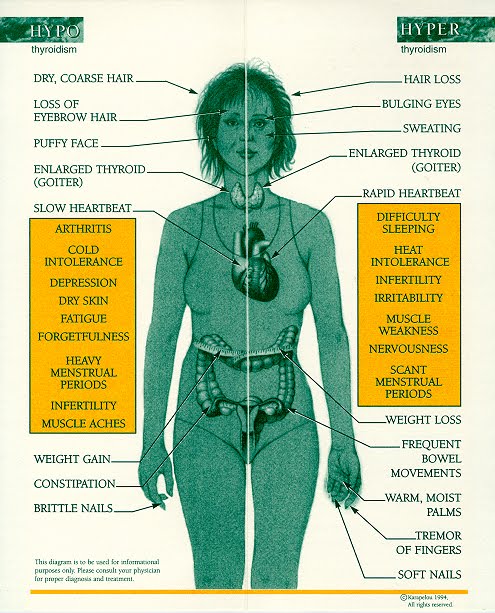
Hypothyroid vs Hyperthyroid

You often hear about someone being HYPOTHYROID or HYPERTHYROID.

This picture shows , at a glance , what all this HYP is all about :-)


We know that the Thyroid gland controls the body's metabolism processes at the cellular level. Its like the thyroid maintains a stable "rpm's (revolutions per minute)" for our body, keeping all our various bodily systems in a wonderful dynamic balance. When this balance is disturbed, either your metabolism can slow down, and sometimes it may also speed up. In the former case, one is supposed to have become HYPOTHYROID, and in the latter case HYPERTHYROID.


Since so many bodily functions are dependent on this metabolism, these HYPO and HYPER states, readily translate into symptoms you and I can observe, and which can show up in any system/part of your body.

Interview with the late Vd. Durgatai Paranjape

(This interview was done in 2003. Vd Durga Paranjape passed away in 2007)

An interview with late Vd. Durgatai Paranjape, Pune, India


(Late Vd. Durgatai Paranjape
, Punes leading Ayurvedic teacher and practising vaidya , would have been today in her eighties. Her father was extremely active well into his nineties, lived with her and her sister, Dr Sindhutai Paranjape, who herself , today at 85, is Pune's leading consulting and practising gynaecologist, obstretician and surgeon (allopathic), currently recovering from a stroke.....)

Vd Durgatai, had some very pertinent observations as she saw the old order give way, sometimes tumultously, to the new.

"Lifestyle , say about 40-50 years ago, consisted of a lot of daily activities, designed automatically, to give that little required exercise or therapy, to your body, and sometimes, even mind, " she observes. "Before the western model of comfort, so to speak, caught on, there was a lot of bending, stretching, twisting of shoulders, using of wrists, etc in your daily work. The cooking platforms were fairly low, so you often sat cross-legged. Bending over the stoves, involved stretching at the waist, hands outstretched. Churning of buttermilk was a wonderful twisting exercise for your waist, arms, actually your whole body, as you drew alternately left and right, on a rope, which was attached across a huge churning rod. That the buttermilk tasted wonderful because of the slow churning was a different thing !

Floors aften needed to be smeared and coated with cow dung and this work was perfect to keep you supple below the waist. This business of getting prepacked veggies from stores just did not exist. One grew a little bit of stuff, and gardening and maintainance of fruit trees, involved, giving the eyes, some great exercise, looking far and near, not to speak of the neck getting great stretching exercise. Festivals consisted of, among other rituals, the appropriate use of seasonal produce cooked in innovative ways, with natural spices, that added taste cum medicinal value for the season."

Vd. Durgatai has something to say about the behavioural patterns prevalent then. "Unlike today, everyone did NOT have an opinion on everything. Maybe they did; but there were rules and stuff on when one could say one's stuff. There was a nice, equitable mix, of where you could be seen, and when you could be heard ; and what happened , was, that an entire generation got some great practice in self control, handling dissapointments, and working within dynamically changing constraint. Today , every alternate person, goes through extremes of emotion; there are more stress related illnesses; all compounded by an additive studded diet, and time related stress, which really does nothing to help the situation".

She observes, that a lot of traditional recipes, where there was a solid reason for adding of several specific ingredients, in harmony with the season of its preparation etc, are today being modified with total disregard. " Addition of nutmeg ,say, in a specific recipe with coconut, had something to do with the constructive binding of these spices, to food items, which was favourable , biologically speaking. Today with stuff like , say, vanilla , added in such recipes, it just creates more droolers, but does nothing for their digestion !", she added.

While admitting that there was much to admire in the progress made by todays women, science, technolgy, educational facilities etc, she is troubled by the fact that, today, the sun has more or less set, on the social set up, where old people in the family were treated with respect, looked after in their old age, and had a definite role to play in the bringing up of grandchildren. The dawn of the nuclear world has spawned a nuclear style of living, and all the earlier stress busting systems that were built-in , no longer exist, or are about to disappear.

So one sees a lot more, of the diseases common to the western world today. Vd. Durgatai and her sister, lost their mother at an early age; they were brought up by their aunt and father, amongst their other brothers and sisters. When I asked them, if their father or aunt ever had diabetes, thyroid problems and stuff, they just had a nice laugh. (I had occasion to know both their father and aunt quite closely, and must say, that I had never met anyone younger or more cheerful, despite the several trying times in their life. It was an honour to know them, I sometimes think they were really the most "modern" people I knew).